By Shane Allen | CarmelloVision
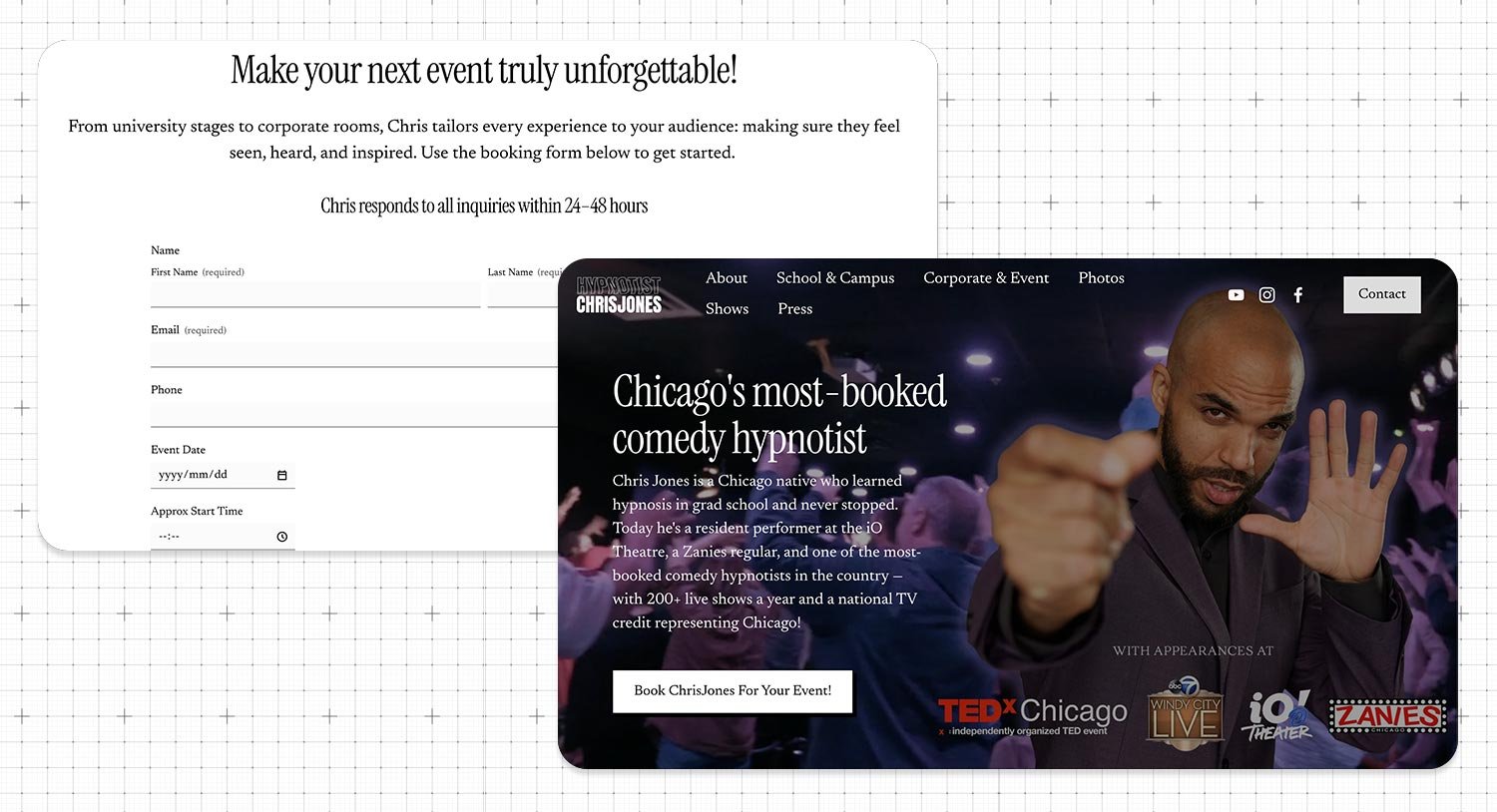
In May we published a case study on the website and booking strategy we built for hypnotist-comedian ChrisJones. That piece was about architecture — two buyer tracks, careful handling of a national TV credential, copy written from the booker's chair. This one is about what happened next.
A launch spike is easy. Almost any redesign produces one — the client shares it, their network clicks through, pageviews jump, everyone feels good. ChrisJones had that too: a 500% jump in pageviews the first month.
The real question arrives about ninety days later, when the launch energy is gone and the site has to earn its traffic. Here's what the data says now.
Did search actually become a channel?
At launch, organic search was a rounding error. Chris ranked for his own name and little else — which is the default state for most performers: a brand that exists on stage and on TV, but not in a search index.
Ninety days in, organic search has pulled level with direct traffic — roughly 41% of sessions each. Over the last three months the site earned 111 clicks from 1,880 search impressions, and the average position across all queries climbed from 15 to under 10 in a single month. The flagship term — "chris jones hypnotist" — now ranks in the top three, pulling booking traffic back to his official site and away from the third-party agency listings that used to intercept it.
None of that came from ads. It came from the unglamorous layer of the build: schema markup, page-by-page metadata, buyer-specific landing pages, and copy that answers the questions bookers actually type.
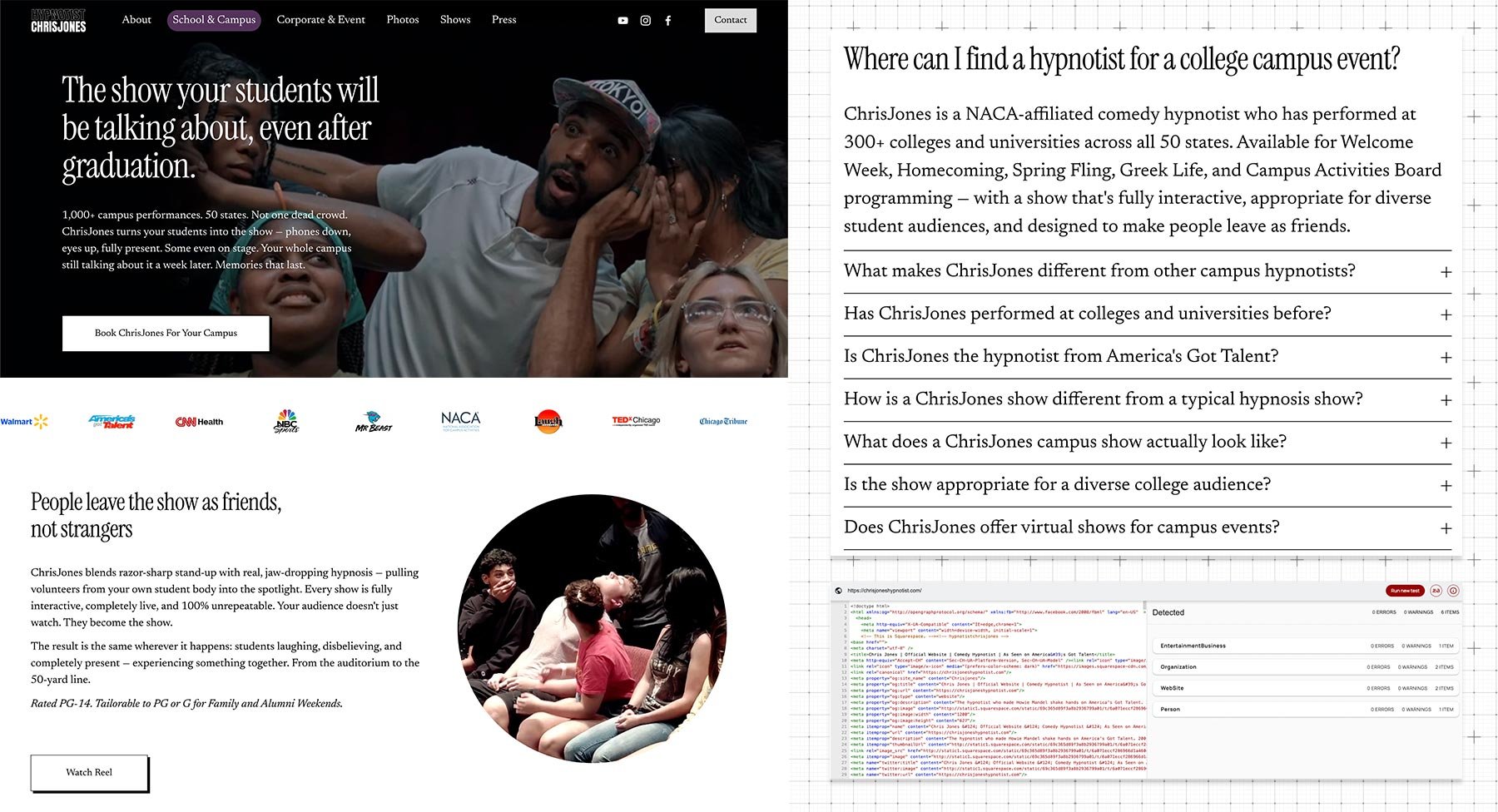
Page layouts and schema updates & testing for Hypnotist Chrisjones.
Is the traffic converting, or just visiting?
This is where the two-track architecture proves itself. The main booking form converted 21.1% of the people who viewed it this month — 8 submissions from 38 form views, up 33% month over month. The contact list grew 33% week over week.
More telling than the count is who's in it: a national insurance brokerage, a Chicago-area university, a neighborhood business association, a contractor group. Corporate planners and campus programmers — the two buyers the site was architected for — both arriving and both converting through their own paths.
One number I like even though it looks like bad news: pageviews are down 27% while visits are up 12%. Visitors are browsing less and acting more. When landing pages match intent, people don't need to wander the site to decide — they arrive on the right page and fill out the form. Fewer pageviews per visit is what a working funnel looks like.
The part I didn't fully expect: AI assistants as a referral channel
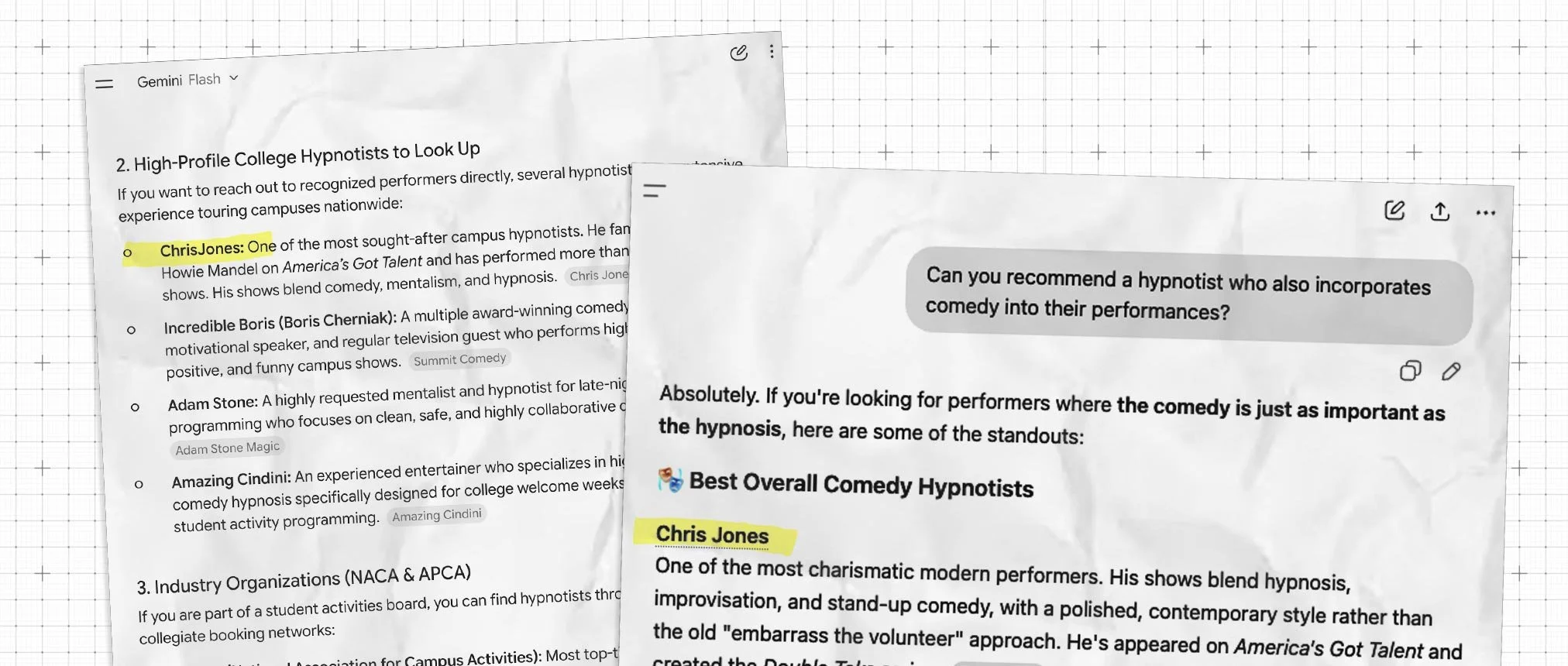
This month, Google Analytics logged a new acquisition channel on Chris's property: AI Assistant. ChatGPT is now sending visitors to chrisjoneshypnotist.com.
It's more than a traffic line, though. When people ask an assistant about Chris by name — "has he been on TV," "how do I book him for a corporate event," "where can I watch his performances" — both ChatGPT and Gemini now answer accurately and point to his official site. And he's starting to surface for broader, unbranded questions too: ask Gemini where to find a hypnotist for a college campus event, and Chris comes up among the top performers in the country.
That's a direct return on the structured data and answer-shaped content built into every page — work that was invisible at launch and is now producing a channel most small businesses don't know exists yet.
Search optimization got performers found by Google. The next few years are about being found by whatever people ask. Chris's site is already in that conversation.
And the number that matters most
When we started this project, Chris's goal was never "more traffic." He'll always take a great stage anywhere — but he wanted the mix to shift toward more of the right shows closer to home in Chicago.
This month, Chicago is the #1 city visiting his site — ahead of every other market in the country. The national demand is still there; now the local demand is catching up to it.
What this reinforces
A website launch is a beginning, not a result. The launch case study was about making the right structural decisions; this update is about those decisions compounding — search catching direct, forms converting named organizational buyers, and new channels (including AI) emerging from foundations laid months earlier.
If your site had its launch moment and then went quiet, the problem usually isn't the design. It's that nothing was built underneath it to compound.
Read the original case study: Performer Website & Campus Booking Strategy for Hypnotist ChrisJones
CarmelloVision is a Tokyo-based design and strategy studio led by Shane Allen, a UX/UI designer and cross-cultural brand strategist with over 10 years of experience working inside Japanese and global teams. Having worked with clients across Japan, the United States, APAC, and the Middle East, CarmelloVision helps companies connect with new audiences through thoughtful UX, localization, and digital storytelling. If you're expanding into new markets or need digital positioning that actually crosses cultures, let's talk.
Check out these project case studies!